スロベニアの巨匠:リュブリャナに息づくヨジェ・プレチニックの建築詩(髙田真之介/慶應義塾大学大学院理工学研究科修士課程)
真之介髙田
ヒトツチ

「協働」という言葉が意味するものは、単なる共同作業や役割分担ではない。異なる場所や制度、施工環境のなかで交わされる判断、関係性の中で生まれる基準、そして実践を継続するための一時的な足場——その総体である。本連載「協働の輪郭」では、建築と美術の現場を行き来しながら、協働というプロセスが作品やプロジェクトに与える影響を探る。第5回は、建築・デザイン事務所clovisbaronianを主宰するジョージナ・バロニアンとサム・クローヴィスを迎え、2023年に東京とニューヨークで開催された協働プロジェクト「Correspondence」を起点に、国際交流を超えた協働のあり方、若い建築家たちが共有する実務的条件、展示を通じて生まれる対話の可能性、そして建築実践を継続するための新しい枠組みについて話を聞いた。
clovisbaronian
素材と環境を建築表現に統合する実践で知られる建築・デザイン事務所である。主宰のジョージナ・バロニアン(1990年生)とサム・クローヴィス(1991年生)はともにプリンストン大学で建築学修士号を取得し、ライス大学建築学部とヒューストン大学建築・デザイン学部で教鞭をとっている。ジョージナは Rice Building Workshop のディレクターとして、同校の実践プログラムを率いている。
HP:https://www.clovisbaronian.com/
Instagram:https://www.instagram.com/clovisbaronian/
井上岳(以下 GROUP):
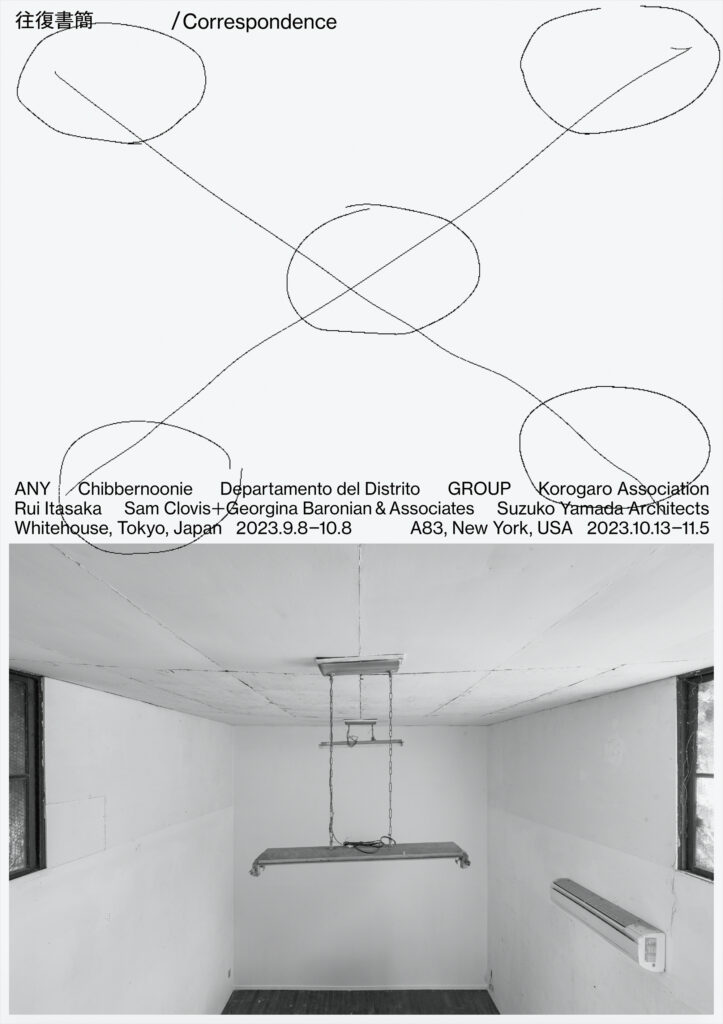
今日はありがとうございます。正直なところ、協働プロジェクト「Correspondence」(2023年東京とNYで行われた、巡回型展示)の最初の段階の細かなことをいくつか忘れてしまっていて。そもそも展示のきっかけは何だったでしょうか。覚えていますか。
バロニアン:
ええ、もちろんです。あなたが東京アーツカウンシルの助成金の申請をしていたときにメールをくれて、協働でプロジェクトを行うためのレターを書いてほしいと頼まれたんです。
GROUP:
そうですね。まだプロジェクトの内容もよく決まっていない段階でした。
クローヴィス:
その時点では、「まだ何をするかは分からないけれど、とにかく支援を申請して、何かが起こる可能性をつくろう」という感じだったと思います。
バロニアン:
助成金の条件に国際交流が含まれていたので、私たちにレターを書いてほしいと頼まれました。
GROUP:
はい。当時いくつかの助成金に同時に応募していて、申請内容を補強する推薦レターが必要だと気づいたんです。それでお願いしました。幸運にも申請が採択されました。
バロニアン:
採択されたのは2022年、ちょうどコロナの時期でしたね。
クローヴィス:
私たちがオハイオに引っ越した頃でした。
バロニアン:
そうですね。レターを書いたのはまだロサンゼルスにいた頃でしたが、展示の準備を本格的に始めたのはオハイオに移ってからでした。
クローヴィス:
いずれにしても、まず助成金が決まって、それからプロジェクトの形が見えてくるまでには時間がかかりました。
GROUP:
はい。全体を整理するのには時間がかかりました。
バロニアン:
でも本格的に動き始めたのは2023年に入ってからでした。参加者を招待し、展示の構想を始めました。
GROUP:
参加者が決まってからは、それほど時間はかかりませんでしたよね。内容決まるまで1〜2か月くらいだったと思います。
バロニアン:
そうですね。その部分は比較的スムーズでした。
クローヴィス:
最初は日本とアメリカそれぞれの側から5〜6組ほど候補があって、そこから絞っていきました。ただ、厳密にペアを対応させるような選び方ではありませんでした。「この事務所が面白い」「あの事務所も面白い」といった感じで、並べてみたら何が起こるかを見る、という姿勢でした。
バロニアン:
両者の文脈を厳密に対応させようとしていたわけではありませんでした。
GROUP:
アメリカ側の参加者はどうやって選んだのですか?
クローヴィス:
かなり状況的な部分もありました。初期段階では展示の内容すら決まっていませんでした。ただ日本とアメリカで展示をやることだけは分かっていたので、まず会場を探す必要がありました。同時に建築設計事務所Chibbernoonieのオーウェンとクララとはすでに話をしていて、彼らがニュージャージーで完成させた住宅がとても興味深かったので、それが招待理由のひとつになりました。
バロニアン:
それに建築設計事務所ANYのナイルとエイベルとはすでにGROUPが一緒に仕事をしていましたよね。
GROUP:
はい。シビック・クリエイティブ・ベース東京(CCBT)という助成の枠組みの中で、「Augmented Situation D」という展示のコキュレーションをした際にVRの展示を渋谷で行ってもらいました。この展示はCorrespondenceのNY展でキュレーションに参加してくれたキュレーター吉田山がキュレーションをしている展示でもありました。
クローヴィス:
メキシコの建築事務所Departamento del Distritoのメンバーとは、まだ会ったことがありませんでした。ただメキシコで完成した住宅を見て、とても印象的だったんです。参加者を見つけるプロセスには、近作が面白く、展示に関係性がありそうな若い建築家の実践を見つけていく、という側面があったんです。
バロニアン:
また、アメリカの都市部だけに限定するのではなく、異なる地域・状況の事務所を含めたいという意図もありました。
クローヴィス:
Departamento del Distrito はメキシコ拠点なので、すでに日米という枠組みを越えていました。
クローヴィス:
日本側はどう選びましたか?
GROUP:
今となってはすべてをはっきり覚えているわけではありませんが、私たちは、日本建築の新しいスタイルを感じさせる事務所を選ぼうとしていました。海外でしばしば期待されるような、ミニマルで静かな日本建築だけではないものです。また東京以外で活動している建築家も重要でした。編集者の服部真吏さんにもプロジェクトに参加してもらいました。往復書簡的に参加者がペアをつくり議論をしていくという仕組みも彼女のアイデアだった気がします。例えば彼女には対話の一部をNTT出版が運営するウェブメディア「DISTANCE.media」に掲載するための編集作業もしていただきました。
バロニアン:
そうですね。彼女とはかなり一緒に作業しました。
GROUP:
服部さんとの関係はとても重要でした。シンポジウムも一緒にやっていましたよね。
バロニアン:
はい。
GROUP:
シンポジウムはどうでしたか?
バロニアン:
昨年、ライス大学の学生と一緒に東京で行ったサマートラベルセミナーに関連していました。テーマは東京の住宅で、戦前住宅から現代住宅まで扱いました。
大学のスタディツアーでは有名建築を訪れることが多いですが、住宅はアクセスが難しいので、できるだけ多くの住宅を訪問できるようにしました。
最後に「Housing Tokyo: New Voices in Japanese Domestic Architecture」というシンポジウムを開催しました。若い建築事務所を招き、それぞれ短い発表とラウンドテーブルを行いました。服部さんがイベント運営と新しい事務所の紹介を大きく手伝ってくれました。
クローヴィス:
私は参加していませんでしたが、このシンポジウムは Correspondence がなければ実現しなかったと思います。そこから日本の若い世代の実践について理解が深まりました。多くのアメリカ人やヨーロッパ人が期待する「日本建築のイメージ」を単に繰り返していない事務所を探していた、と先ほど言っていましたよね。それを見て強い印象を受け、それが後のシンポジウムにも影響しました。スイスの「Make Do With Now」のような展示もありましたが、アメリカではまだこの世代は十分知られていません。
GROUP:
私たちは今も、新しい日本建築を国際的にどう提示するかを探っています。シンポジウムや Correspondence、Make Do With Now もその試みですが、まだはっきり定義できていません。何か新しい傾向があることは感じていますが、正確に言語化するのは難しい。どう思いますか?
クローヴィス:
まだその只中にいるうちに何かを定義するのは、いつだって難しいと思います。普通は、名前を与えるためにはある程度の距離が必要です。たぶん10年後なら、この瞬間が何を意味していたのかをもっと理解しやすくなるでしょう。でも同時に、今起きていることは単に形式言語の問題だけではないとも思います。経済的条件や、実践の現実とも関わっています。多くの国で、若い事務所は「そもそもどうやって仕事を続けるか」という似たような問いに直面しています。
クローヴィス:
私たちは協働を「建築実践として良い」というだけでなく、「仕事を見つける方法」としても考えています。
世の中の建築事務所はどんどん大きくなり、それらに発注が集中しています。かつて若い事務所が受けていたプロジェクトが、大きな事務所に流れています。
バロニアン:
中規模事務所が消えつつあります。クライアントはリスク回避的になり、大きな事務所を選びます。
クローヴィス:
今は2人か100人かという感じです。中間が少ない。だから組織間の協働が重要になります。ひとつのプロジェクトのために人を増やすのは、次の仕事があるかわからないならリスクが高い。そうであれば、新たに人を雇うより、他の事務所と一時的なパートナーシップを組むほうが理にかなっている場合があるんです。
バロニアン:
協働は異なる文脈で働く機会も生みます。例えば今 Bangkok Tokyo Architecture とタイでプロジェクトをしています。自分があの場所で仕事をすることになるとは想像もしていませんでしたが、協働がそれを可能にしました。異なる文化や施工条件を経験する機会を生み出してくれるんです。
クローヴィス:
そうですね。しかもそのケースでは、私たちはコンクリート構造を設計していて、それはアメリカではなかなか難しいことです。
バロニアン:
アメリカではコンクリートは高価で環境負荷も大きく、小規模プロジェクトでは扱う機会が少ないです。でもタイでは違います。逆に木材はアメリカでは安く、タイでは高い。こうした違いは興味深いです。
GROUP:
環境持続性の議論はグローバルノース中心に語られている気がします。東京でもコンクリートは高いです。
バロニアン:
持続可能性は時に贅沢です。本来そうであるべきではありませんが。
クローヴィス:
東南アジアの竹構造などは持続可能性のモデルとして称賛されますが、現地では特殊で高価な技術でもあります。
バロニアン:
そうした技術の知識は広く共有されているわけではありません。
クローヴィス:
Correspondence は日米対話だけでなく、世代的条件の共有でもありました。どう仕事を見つけるか。どう仕事を実現するか。「何をやるか分からないけれど何かやろう」というかつてのあなたのメールも、その条件の一部です。
バロニアン:
多くの場合、自主的に始める必要があります。
クローヴィス:
誰も見つけてくれません。自分で見つけるしかない。
クローヴィス:
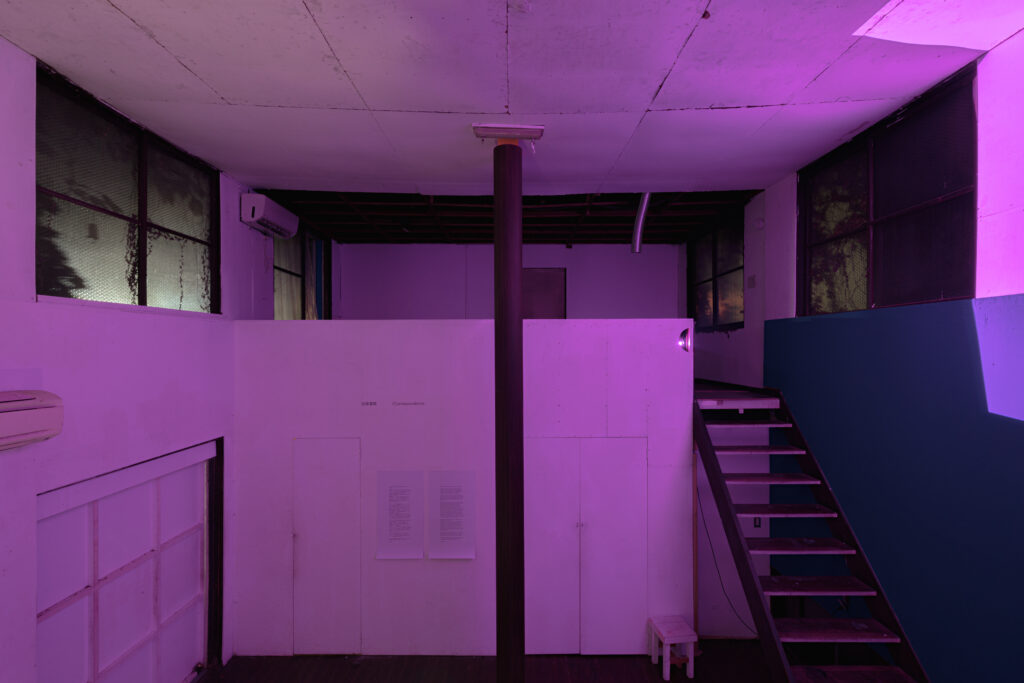
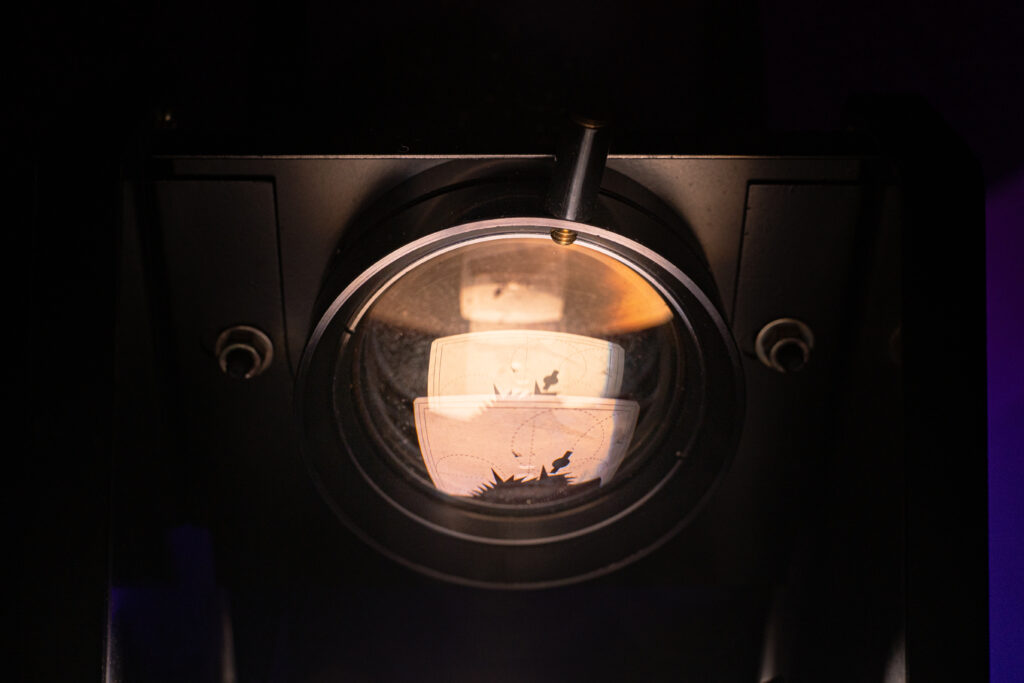
「ホワイトハウス」はプロジェクトの構造として重要でした。東京のサイトスペシフィックな展示をどう別の展示に展開するかという問題がありました。最初からホワイトキューブだったら難しかったと思います。住宅と磯崎新という存在が共通の焦点になりました。
バロニアン: 磯崎についても共有された学びがありました。それが枠組みとして機能しました。
クローヴィス:
別の場所、別の人物でやったら全く違う結果になるでしょう。
GROUP: 面白いですね。
GROUP:
ニューヨーク展はとても早かったですね。
バロニアン:
ホワイトハウス展は9月末、ニューヨークは10月初旬でした。東京展に応答する形だったので事前準備はできませんでした。4週間で設計・制作・設営を決めました。幸いオーウェンとクララのNY事務所の地下に印刷設備がありました。
クローヴィス:
それでも大変でした。建築展ではよくある状況ですが。
バロニアン:
展示当日に届いた作品もありました。リアルタイムで設計が更新されました。
バロニアン:
何かが来ることは分かっていたけれど、それが何かは分からない。設営自体が設計プロセスでした。
クローヴィス:
前日に車でニュージャージーまで写真家・現代作家の村田啓さんの写真を取りに行きました。
バロニアン:
空港を間違えたんです。
クローヴィス:
大変でした。
バロニアン:
でも最終的にはうまくいきました。
GROUP:
ニューヨークでは展示構成も設計しましたよね。どのように考えていましたか?
バロニアン:
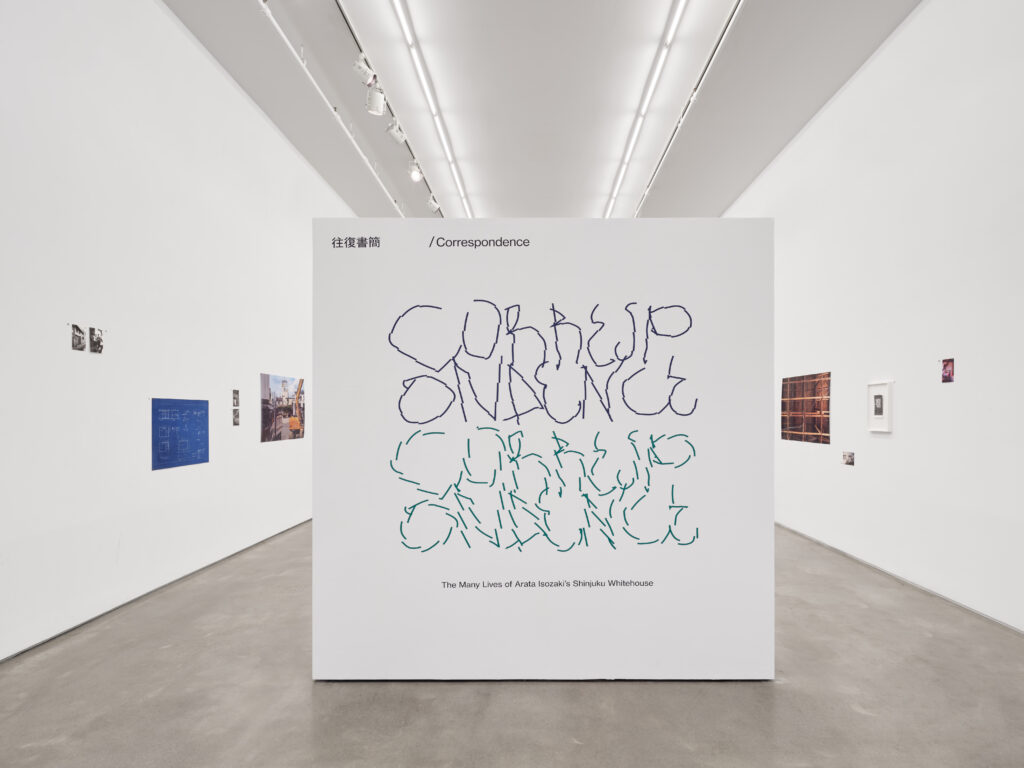
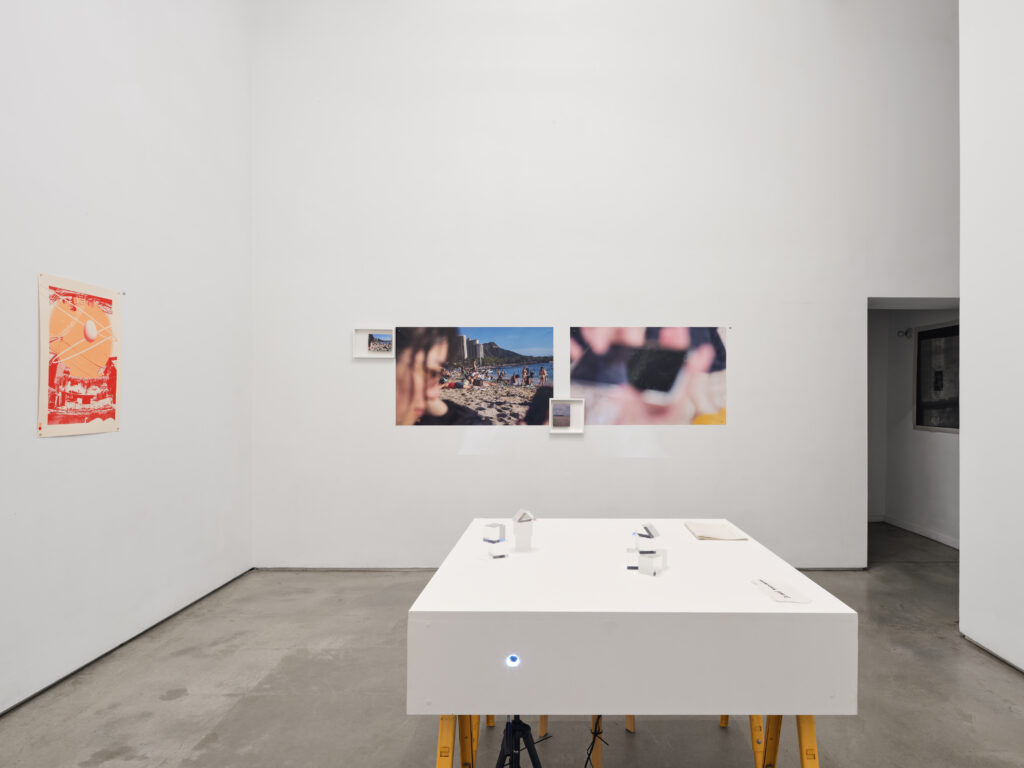
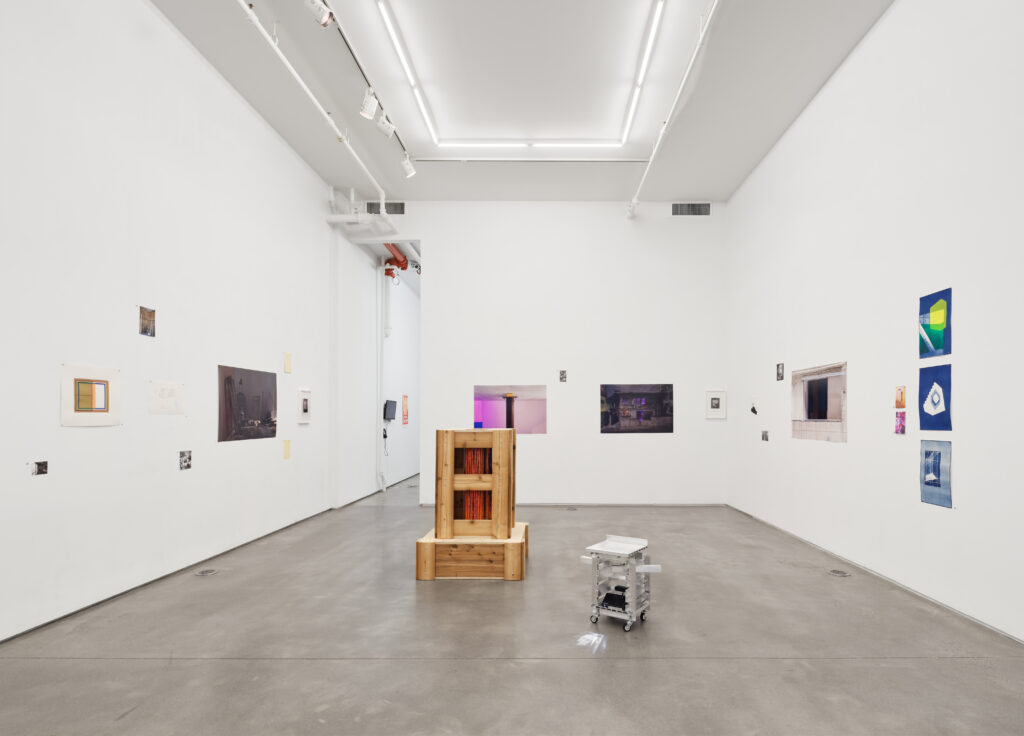
振り返ってみると興味深いのは、ホワイトハウスに関するアーカイブ資料と東京でのインスタレーションの記録を一緒に展示したことです。展示は部分的に印刷メディアを軸に構成されていて、異なる時期やカテゴリーに応じて作品を整理しました。
クローヴィス:
村田さんの写真は壁面にリズムを生み出していました。大型プリントや他のグラフィック素材と組み合わさっていました。アーカイブ資料は現代の作品とは異なる方法で印刷されていて、それによってもうひとつの層が生まれていました。振り返ると、ウォルフガング・ティルマンスの展示方法に少し似ていたと思います。単線的な物語ではなく、異なるスケールや形式が星座のように配置される構成です。
バロニアン: 私たちが考えていた問いのひとつは、「この展示を、何の文脈もなく入ってきた人にも理解しやすくするべきか?」ということでした。それとも、この展示自体が「ひとつのアイデア」ではなく「プロセス」であることを受け入れるべきなのか。
これは東京での作品についての展示なのか?
ホワイトハウスについての展示なのか?
参加建築家についての展示なのか?
それとも別の何かなのか?
私たちは、それをひとつの物語に還元しないことにしました。
クローヴィス:
ニューヨークの ギャラリーa83はとても重要な場所です。アメリカでは、建築を継続的に展示している場所はほとんどありません。特に若い事務所の仕事はなおさらです。大学の外では、そのような機関はほとんど存在しません。
バロニアン:
以前はもっとありました。例えばロサンゼルスには建築・デザインミュージアムがありましたが、財政的に維持できず閉館しました。建築展を継続するのは難しいのです。建築図面は売れませんから。だからこそ、あのような場所はとても貴重です。
クローヴィス:
その場所の歴史も重要です。オーウェンの父親は何十年もそこで働いていました。つまりアーカイブ自体が空間の一部なのです。
バロニアン:
あの場所で展示できたのはとても幸運でした。
GROUP:
1975年に ニューヨーク近代美術館MoMA で新宿をテーマにした展示がありましたが、日本建築の海外展示はしばしば「西洋とは異なる文化」として提示されます。Correspondenceも、ニューヨークでも展示されましたが、いわゆるアメリカから見た「日本」とは別の関係性を模索したかったのです。
クローヴィス:
これは単純に北米と日本を並べる展示ではありませんでした。国際交流を基盤にはしていましたが、国民性の比較ではありません。むしろ異なる文脈のあいだで協働を交渉するプロセスでした。
バロニアン:
私にとっては、どの部分がどちら側から来たものかは必ずしも明確ではありませんでした。それよりも統合されたものとして感じられました。
GROUP:
GROUPは日本ではアーティストとの協働はよくありますが、Correspondence 以前は海外の建築家との協働経験はあまりありませんでした。展示の後、その方向に多くの可能性を感じました。時には同じ文脈の建築家より、異なる文脈の建築家と協働する方が容易だと感じることもあります。
バロニアン:
どうしてそう思うのですか?
GROUP:
違いが最初から明確だからかもしれません。文脈が大きく違えば、その違いを受け入れやすい。
バロニアン:
確かにそうですね。同じ文脈で異なる応答をすると緊張が生まれます。でも文脈がはっきり異なっていれば、その違いの理由も理解しやすい。
バロニアン:
若い日本の建築家の多くが海外で学んでいる印象があります。以前より一般的になっているように感じます。どう思いますか?
GROUP:
例えば槇文彦はハーバードで学びましたよね。以前の世代では海外留学できる建築家は限られた背景を持つ人が多かったと思います。状況が完全に変わったとは言えませんが、今は海外に行かなくてもつながりを持てる機会は増えています。私自身も以前は海外に行く機会が多くありませんでしたが、このようなプロジェクトを通してつながりが生まれました。こうした接続はボトムアップでも可能だと思います。
クローヴィス:
他の文脈の仕事にアクセスするのも簡単になりました。
GROUP:
SNSで直接連絡できますし、PDFやオンライン出版でどこでもプロジェクトが見られます。この状況を使って新しい建築コミュニティをつくるべきだと思います。
クローヴィス:
ある意味、それこそ Correspondence がやっていたことですね。
バロニアン:
Correspondence は私たちにとっても初めての形式でした。でも気がついたら、実務の考え方の一部になっていました。
クローヴィス:
そうですね。あなたは今、似た構造のプログラムを運営していますよね。
GROUP:
はい。この経験を通して、展示にワークショップや対話のプロセスを含める可能性を考えるようになりました。展示が協働を継続する枠組みになりうると思いました。
クローヴィス:
将来的にはシリーズにもできるかもしれませんね。
GROUP:
そうですね。
クローヴィス:
ただ、このプロジェクトではホワイトハウスの存在が重要でした。磯崎という人物と住宅そのものが構造を与えていました。もし空のギャラリーで単に二人の建築家が協働するだけだったら難しかったかもしれません。
バロニアン:
同意します。応答すべき対象があることで協働は強くなりました。
GROUP:
今後の予定はありますか?
バロニアン:
明確な計画があればいいのですが。
クローヴィス:
コンペは続けていますが簡単ではありません。若い事務所は常に「どう仕事を成立させるか」という問題に直面します。誰も仕事を持ってきてくれません。自分で見つけて、説得しなければならない。
バロニアン:
だから自主プロジェクトが重要になります。
クローヴィス:
それが大学で働いている理由のひとつでもあります。大学は協働者に出会い、展示を企画し、アイデアを発展させるプラットフォームになります。でもコンペも続けています。
GROUP:
私の場合は建築家同士の協働もひとつの可能性です。また素材メーカーや製造業者と協働して、建築だけでなく空間やプロダクトを一緒につくることにも関心があります。さらにアーティストとの協働によって建築の領域を広げたいとも考えています。まだその可能性を探っている段階です。
クローヴィス:
それも協働が重要になる理由ですね。ひとつの事務所にひとつの実作があり、別の事務所に二つあれば、合わせて三つの実作として提示できます。協働は競争力を高める方法でもあります。こうした一時的なパートナーシップが若い事務所の継続を支えています。
バロニアン:
私たちの現在のプロジェクトの多くもその意味での協働です。
GROUP:
最近はローカルアーキテクトとデザインアーキテクトの関係についても考えています。ローカル側が実務をすべて決め、デザイン側が詳細をコントロールできない状況があります。別の協働モデルを考えたいと思っています。日本でも国際的な建築家同士の協働はもっと可能になると思います。設計料の問題があると言われますが、それよりまずプロジェクト自体が必要です。
バロニアン:
その分業は双方にとって必ずしも良いとは限りませんよね。ローカルは設計への影響力が少なく、デザイン側は施工をコントロールできない。より対等になればプロジェクトは良くなるかもしれません。
クローヴィス:
再考する価値のあるモデルだと思います。例えばチューリッヒとベオグラードを拠点にしている建築設計事務所TENのように、レコードレーベルのような構造でプロジェクトごとに人が出入りする事務所もあります。より非階層的な構造です。
バロニアン:
ただし課題もあります。理想化しすぎないことも重要です。階層は効率性のためにも存在しています。
GROUP:
確かにそうですね。難しいですが重要なテーマです。
クローヴィス:
こうした協働の枠組みは今後も続いていくと思います。
GROUP:
展示が異なる国の建築家同士のワークショップや対話の場になる可能性に関心があります。
クローヴィス:
別の敷地や別の歴史的人物でやれば、結果は全く変わるでしょう。
バロニアン:
重要なのは、共通して応答できる構造を持つことです。
GROUP:
私もそう思います。ありがとうございました。
「Correspondence」を通じて見えてきたのは、協働が異なる文脈を接続するだけでなく、建築家が実践を続けるための足場をつくり出すということだ。何をつくるのかが定まらないまま始まり、東京からニューヨークへと応答しながら変化していく展示のプロセスは、協働そのもののかたちでもあった。不確実さを引き受け、他者とともにプロジェクトを立ち上げること——今回のインタビューは、建築を続けるための協働の輪郭を描いた。
協働の輪郭 | Group Form
Vol. 5: “Collaboration Is How We Continue Architecture”
Interviewees: Georgina Baronian and Sam Clovis, Architects
“Collaboration” is not only a way for architects to divide roles with others; it is also a condition for sustaining practice. For young offices to find work and realize projects across different places, institutions, and construction environments, temporary partnerships and self-initiated frameworks become crucial. In this series, Contours of Collaboration, we move between architecture and art, and between local contexts and international practice, to examine how the process of collaboration influences works and projects. In this fifth installment, we speak with Georgina Baronian and Sam Clovis, principals of the architecture and design practice clovisbaronian. Taking the collaborative project “Correspondence,” held in Tokyo and New York in 2023, as a point of departure, the conversation explores forms of collaboration that go beyond international exchange, the practical conditions shared by younger architects, the possibilities for dialogue generated through exhibitions, and new frameworks for sustaining architectural practice.
clovisbaronian is an architecture and design practice known for work that integrates material experimentation and environmental performance into architectural expression.
Principals Georgina Baronian (b. 1990) and Sam Clovis (b. 1991) received their Master of Architecture degrees from Princeton University and respectively serve on the faculty of the Rice University School of Architecture and the University of Houston College of Architecture and Design. As Director of the Rice Building Workshop, Georgina leads the School’s collaborative-practice program.
HP:https://www.clovisbaronian.com/
Instagram:https://www.instagram.com/clovisbaronian/
Inoue Gaku (hereafter GROUP):
Thank you. To be honest, I forgot some of the details of the first stage of the project. What was the trigger of the exhibition? Do you remember?
Baronian:
Yes, of course. You sent me an email when you were submitting an application for a grant, and you asked me to write a letter inviting you to do a project.
GROUP:
Yes, before we really knew what the project would be.
Clovis:
I think the idea at that stage was something like: we don’t know exactly what the project is yet, but let’s ask for support and create the possibility for something to happen.
Baronian:
And part of the grant required an international exchange, so you asked us to invite you.
GROUP:
Yes. We were preparing many documents for the foundation, like other applications we were doing at the time, and I realized we needed letters to support what we were proposing. So I asked you to write one.
Fortunately, we received the grant.
Baronian:
I think we got the grant in 2022, during the Covid period.
Clovis:
It was around the time we had just moved to Ohio.
Baronian:
Yes, that’s right. We wrote the letter earlier, when we were still in Los Angeles, but then we began organizing the exhibition more concretely when we were in Ohio.
Clovis:
In any case, the grant came first, and then it took some time before the project really started to take shape.
GROUP:
Yes, it took time to organize everything.
Baronian:
But basically we started working on it properly in early 2023, when we invited the participants and began developing the exhibition.
GROUP:
As for deciding the participants, I think it didn’t take so long to finalize the list. Maybe one or two months.
Baronian:
Yes, that part was relatively easy.
Clovis:
There were maybe five or six offices from each side at the beginning, and we narrowed it down from there. But I don’t think there was an attempt to match pairs very precisely, like choosing offices that directly corresponded to each other.
It was more that these offices were interesting, and those offices were interesting, and we would see what would happen once they were brought together.
Baronian:
Yes, I don’t think we were trying to construct exact parallels between the two contexts.
GROUP:
How did you decide the participants from the U.S. side?
Clovis:
Some of it was circumstantial. At the early stage we didn’t even know what the exhibition would be exactly. We only knew that there would be an exhibition in Tokyo and another in the U.S., so we were first trying to figure out where those exhibitions could take place before we even knew what would be exhibited.
At the same time, we were already in conversation with Owen and Clara, and they had just completed a house in New Jersey that we found interesting, so that became one reason to invite them.
Baronian:
And you had already worked with Nile and Abel before, so there was already a connection there.
GROUP:
Yes, I wanted to experience doing something together with them in the exhibition Augmented Situation D. This exhibition was also curated by Yoshidayamar, the curator who had participated in the curation of Correspondence’s New York exhibition.
Clovis:
With Nathan and Departamento del Distrito, I think we hadn’t met them personally yet. We had only seen their work, including a house they had just finished in Mexico, which we found very compelling.
So part of it was simply identifying younger practices whose recent work seemed interesting and relevant.
Baronian:
And it was also not only about selecting offices from one region like New York or California. There was an interest in including practices from different locations and different situations.
Clovis:
Yes, and also Departamento del Distrito is based in Mexico City, so it was already extending beyond a strictly U.S.–Japan framework.
Clovis:
What about from your side? How did you select the Japanese participants?
GROUP:
I don’t remember everything clearly now, but we were trying to select offices that suggested a new style of Japanese architecture—not only the kind of minimal and quiet architecture that is often expected internationally.
We were also thinking about architects who are not working only in Tokyo. That was important for us.
At the same time, there were many possible participants. I also invited editor Mari Hattori to participate in the project. I think the structure in which participants formed pairs and developed discussions through a kind of correspondence was also her idea. For example, she also edited part of those dialogues for publication on DISTANCE.media, a web platform operated by NTT Publishing.
Baronian:
Yes, I remember working with her quite a lot on that.
GROUP:
Yes, I think that connection with Mari was very important. You also did a symposium with her.
Baronian:
I did, it was quite a nice event I think.
GROUP:
How was the symposium? Or: Tell me more about the symposium.
Baronian:
It was connected to a summer traveling seminar I was teaching with students from Rice University in Tokyo last year. The seminar focused on housing in Tokyo, from prewar housing to contemporary projects.
Often when universities organize study trips to Tokyo, they visit well-known public buildings. But housing is much more difficult to access, so I tried to organize visits to a number of houses.
At the end of the trip, I organized a symposium called Housing Tokyo: New Voices in Japanese Domestic Architecture. I invited several younger practices working on housing, and each office gave a short presentation followed by a roundtable discussion.
Mari collaborated with me to organize the event and introduced me to new practices.
Clovis:
I wasn’t there, but I do think that symposium wouldn’t have happened without the Correspondence project. Through Correspondence, we began to understand more about the younger generation of Japanese practices.
As you mentioned earlier, Gaku, you were looking for offices that were not simply repeating what many Americans or Europeans expect contemporary Japanese architecture to be.
Seeing those practices made a strong impression on us, and that later influenced the symposium.
There have been exhibitions like Make Do With Now in Switzerland that introduced some of this work internationally, but I still think many people in the United States are not very familiar with this generation.
GROUP:
I think we are still searching for a way to present a new kind of Japanese architecture internationally.
Projects like the symposium, Correspondence, and Make Do With Now are all trying to identify something, but I don’t think we can clearly define what it is yet.
We can feel that there is a new tendency in Japanese architecture, but it is still difficult to describe it precisely.
What do you think?
Clovis:
I think it’s always difficult to define something while you’re still inside it. Usually you need some distance before you can give it a name.
Maybe ten years from now it will be easier to understand what this moment represents.
But I also think what is happening now is not only about formal language. It is also related to economic conditions and the realities of practice.
Across many countries, younger offices are facing similar questions about how to continue working at all.
Clovis:
We often talk about collaboration not only as something that is good practice in architecture—which of course it is—but also as a way to find work.
Offices are getting bigger and bigger, and they are absorbing more and more commissions. The kinds of projects that younger offices used to get are now often going to larger firms.
Baronian:
Yes, the mid-size office is really disappearing. Clients are becoming more risk-averse, so they tend to choose larger offices.
As a result, there are fewer opportunities for younger practices.
Clovis:
It sometimes feels like offices are now either two people or one hundred people. There is less and less of that middle scale.
So collaboration becomes one way to continue working.
Instead of hiring more people for a single project—which is risky if you don’t know whether another project will follow—it can make more sense to form temporary partnerships with other offices.
Baronian:
And collaboration also allows us to work in different contexts.
For example, right now we are working with Bangkok Tokyo Architecture on a project in Thailand. I never imagined I would be working on a project there, but collaboration made it possible.
It creates opportunities to experience different cultures and construction conditions.
Clovis:
Yes—in that case we are designing a concrete structure, which can be difficult in the United States.
Baronian:
In the U.S., concrete is very expensive and also environmentally problematic, so younger practices rarely have the opportunity to work with it on small projects.
But in Thailand the situation is completely different.
Similarly, timber is relatively inexpensive in the United States but much more expensive in Thailand.
Understanding these differences between contexts is very interesting.
GROUP:
Yes, sometimes I feel that environmental sustainability is discussed mainly from the perspective of the Global North. It doesn’t always correspond to the realities of other regions.
For example, building in concrete is already very difficult in Tokyo because of cost.
Baronian:
I think sustainability is sometimes a luxury.
It shouldn’t be, but in many contexts it still is.
Clovis:
When architects in Europe or the U.S. look at projects in Southeast Asia, they often celebrate bamboo structures and other craft-based construction methods as models of sustainability.
But when we talked with architects from the region, they explained that these techniques are not necessarily typical. They are often expensive and specialized.
Baronian:
And the knowledge required for those techniques is not always widely available anymore. It can be quite rare.
Clovis:
In that sense, I think Correspondence was not only about a dialogue between Japan and North America.
It was also about a shared condition across a generation.
How do we find work? How do we make work happen?
Even the way the project began—with your email saying “I’m not sure what the project is yet, but let’s do something”—is part of that condition.
Baronian:
Yes. It has to be self-initiated in many cases.
Clovis:
Nobody finds you. You have to find them.
Clovis:
I think the White House was important as a kind of structure for the project. At the beginning there was a question of how we could take something that was a site-specific installation in Tokyo and somehow transform it into a second exhibition.
If it had just been a white cube gallery space from the beginning, it might have been much more difficult. The house—and Isozaki as a figure—gave the collaboration a shared focus.
Baronian:
Yes, I think there was also a kind of shared learning about Isozaki. Even Rui mentioned that she hadn’t studied him very much before. So there was a shared discovery happening through the project.
Having that as a framework made it easier to respond together.
GROUP:
The exhibition in New York happened very quickly after the Tokyo exhibition.
Baronian:
The White House installation opened at the end of September, and the exhibition in New York opened at the beginning of October. There was no way to prepare the New York exhibition before the Tokyo exhibition was finished, because it was meant to respond to that work.
So we only had about four weeks to decide the exhibition design, what to show, how to print everything, and how to install it.
Fortunately, Owen and Clara have the print shop in the basement, which made things much easier.
Clovis:
Even so, it was still difficult. They were printing materials for other shows at the same time, so there was only a short window to produce everything.
But that kind of condition is typical for architecture exhibitions.
Baronian:
The participants also produced additional material for the New York exhibition beyond what they showed in Tokyo. Some of that work arrived on the day of installation.
So the exhibition design had to adapt in real time to whatever actually arrived.
Clovis:
It was similar to what happened in Tokyo. We didn’t know exactly what the final elements would be, so the design had to remain open.
Baronian:
In that sense, the exhibition developed in real time. We knew something would be there, but we didn’t know exactly what.
So the installation process became part of the design process.
Clovis:
I had to rent a car the day before installation and drive to New Jersey to pick up Murata-san’s photographs because we had flown into the wrong airport.
Baronian:
We were supposed to fly into Newark, but we arrived at LaGuardia instead, which complicated everything.
Clovis:
It was stressful.
Baronian:
But everything worked out in the end.
GROUP:
In New York you also designed the exhibition layout. How did you think about that?
Baronian:
Looking back, it was interesting that we showed archival material about the White House together with documentation from the installations in Tokyo.
We structured the exhibition partly through printed media, organizing different kinds of works in relation to different time periods and categories.
Clovis:
Murata-san’s photographs created a kind of rhythm across the walls, together with large-format prints and other graphic materials.
Some of the archival material was printed differently from the contemporary work, which created another layer of distinction.
Looking back now, I realize there were some similarities with the way Wolfgang Tillmans installs his work—this idea of a constellation of different scales and formats rather than a single linear narrative.
Baronian:
One of the questions we had was whether we should try to make the exhibition easy to understand for someone entering the space without context, or whether we should accept that the exhibition itself was about a process rather than a single idea.
Was it about the work in Tokyo? Was it about the White House? Was it about the participating architects? Or was it about something else?
We decided not to reduce it to one single story.
Clovis:
That gallery in New York is also a very important space. There are very few places in the United States that regularly exhibit architectural work, especially work by younger practices.
Outside universities, there are not many institutions doing that anymore.
Baronian:
There used to be more spaces. For example, in Los Angeles there was an architecture and design museum, but it struggled financially and eventually closed.
It is difficult to sustain architecture exhibitions because architectural drawings are not easily sold.
So spaces like A83 are very valuable.
Clovis:
Its history is also important. Owen’s father worked there for decades, so the archive itself is part of the space.
Baronian:
We were very lucky to be able to show the exhibition there.
GROUP:
In 1975 there was an exhibition about the city of Shinjuku at MoMA. In many cases, exhibitions of Japanese architecture abroad present Japanese culture as something distinct from Western culture.
But in Correspondence, the exhibition also happened in New York, and it created a different kind of relationship between contexts.
Clovis:
Yes. It was not simply about presenting North American architects on one side and Japanese architects on the other.
Even though the project was based on international exchange, it was not really about comparing national sensibilities.
It was more about the process of negotiating collaboration across different contexts.
Baronian:
From my perspective, it was not always clear which parts of the work came from which side. It felt more integrated than that.
GROUP:
In Japan we often collaborate with artists, but before Correspondence I had less experience collaborating with foreign architects.
After the exhibition I began to feel that there were many possibilities in that direction.
Sometimes I even feel it is easier to collaborate with architects from different contexts than with architects working in the same context.
Baronian:
Why do you think that is?
GROUP:
Maybe because the differences are already clear. When the contexts are very different, it is easier to accept those differences.
Baronian:
Yes, that makes sense. If you are working in the same context but responding to it differently, that can create more tension.
But when the contexts are clearly separate, it is easier to understand why the differences exist.
Baronian:
One thing I noticed is that many younger Japanese architects seem to have studied abroad. It feels more common now.
Do you think that is true?
GROUP:
For example, Fumihiko Maki studied at Harvard. In earlier generations many Japanese architects who studied abroad came from very privileged backgrounds.
Today I am not sure the situation has completely changed, but I think there are more opportunities for communication now, even for people who did not study overseas.
For example, in my own case I did not have many opportunities to go abroad earlier, but through projects like this I was able to connect with architects from other countries.
I think this kind of connection can also happen from the bottom up.
Clovis:
It is also much easier now to access work from other contexts.
GROUP:
Yes. We can contact architects directly through social networks, and we can see projects from everywhere through PDFs and online publications.
We should use that situation to create new kinds of communities for architecture.
Clovis:
Yes—and in a way, that is exactly what we were doing through Correspondence.
Baronian:
I think Correspondence was also our first time working in that kind of format. And now, unexpectedly, it has become part of how we think about practice.
Clovis:
Yes, you’re running a whole program now that is structured around similar ideas.
GROUP:
For us, through that experience, we began to imagine how exhibitions could include workshops, conversations, or other kinds of processes between architects from different countries.
It made me think that exhibitions could become a framework for continuing collaboration.
Clovis:
At the same time, I think the White House played an important role in this particular project. Isozaki as a figure—and the house itself—gave the collaboration a structure.
Without that, if it had simply been two architects working together in an empty gallery, it might have been more difficult.
Baronian:
I agree. Having something specific to respond to made the collaboration stronger.
GROUP:
Do you have plans for the future?
Baronian:
If I had a clear plan, that would be nice, but for now uncertainty comes with its own interests.
Clovis:
When you are a young practice without many resources, the question is always how to make work happen. Nobody is approaching you with commissions.
Nobody finds you. You have to find them—and convince them that you have something to offer.
Baronian:
That’s why self-initiated projects become important.
Clovis:
And that is also one reason we are both working at universities in the United States. The academy provides a platform for meeting collaborators, organizing exhibitions, and developing ideas.
GROUP:
For me, one possibility is collaborating with other architects on new projects. Another possibility is working with material companies or manufacturers—not only designing buildings for them, but trying to develop different kinds of spaces or products together.
I am also interested in working more with artists, to create new territories for architects.
I am still searching for what kind of work is possible in those directions.
Clovis:
That’s another reason collaboration becomes important.
If one office has one built project and another office has two, together they can present three built projects. So collaboration becomes a way of making yourself more competitive.
These temporary partnerships are one way younger practices continue working.
Baronian:
Many of the projects we are working on right now involve collaboration in that sense.
GROUP:
Recently I have also been thinking about the relationship between a local architect and a design architect.
Sometimes I feel that the local architect decides everything related to execution, while the design architect cannot control the details. I am interested in finding another model for how these roles could work together.
I think more collaborative combinations between architects from different countries will become possible in Japan as well.
Some people say that design fees make this difficult, but I don’t think that is the main issue. If there is no project, then what we need first is the project itself.
Baronian:
Do you think the traditional division between design architect and local architect is sometimes not good for either side?
The local architect may have less influence on the design, while the design architect has less control over construction. If those roles were shared more equally, it might improve the project for both.
Clovis:
Yes, I think it is an interesting model to rethink.
There are offices like TEN, for example, that try to organize their work in a more flexible way where collaborators move in and out depending on the project.
It’s a more non-hierarchical structure.
Baronian:
But it also comes with challenges. It’s easy to romanticize those models.
Hierarchies exist partly because they are efficient.
GROUP:
Yes, that’s true. It is challenging—but still important to explore.
Clovis:
Still, I think these kinds of collaborative frameworks could continue in the future.
GROUP:
Yes. I’m interested in how exhibitions can become platforms for workshops, conversations, and shared processes between architects from different countries.
Clovis:
And with a different site or a different historical figure, the outcome would be completely different.
Baronian:
Yes. The important thing is having a shared structure that people can respond to together.
GROUP:
Yes, I think so too.
Thank you very much.
What emerged through “Correspondence” was that collaboration does not simply connect different contexts; it also creates a foothold from which architects can continue their practice. Beginning before it was clear what would be made, and transforming responsively as it moved from Tokyo to New York, the exhibition process itself became a form of collaboration. Taking on uncertainty and initiating projects together with others—this interview traced the contours of that possibility.
【出典・参考】
TOKYO
会期/Date: 2023/9/8~10/8
会場/Venue: WHITEHOUSE
住所/Address: 東京都新宿区百人町1-1-8 WHITEHOUSE
開場時間/Opening hours: 水木金14:00~19:00, 土日祝13:00~19:00
出展者/artists and architects: ANY, Chibbernoonie, Departamento del Distrito, GROUP, Korogaro Association, Rui Itasaka, sam clovis + georgina baronian & associates, suzuko yamada architects
会場構成/Exhibition design: w/
New York
会期/Date: 2023/10/13~11/5
会場/Venue: a83
住所/Address: 83 Grand St, New York, NY 10013 USA
出展者/artists and architects: ANY, Chibbernoonie, Departamento del Distrito, GROUP, Korogaro Association, Rui Itasaka, sam clovis + georgina baronian & associates, suzuko yamada architects, 青柳菜摘, 河野未彩, 布施琳太郎, 三野新, 村田啓, ARCHI HACH
会場構成/Exhibition design: sam clovis + georgina baronian & associates
主催/Organized by: GROUP, sam clovis + georgina baronian & associates
制作/Produced by: 佐久間萌香
協力/Supported by: 公益財団法人東京都歴史文化財団 アーツカウンシル東京[東京芸術文化創造発信助成], DISTANCE.media, lull, Inc.
キュレーション・編集/Curated & Edited by: 井上岳, 寺田慎平, 服部真吏, 涌井智仁, 渡邊育, sam clovis, georgina baronian
NY exhibition organizer: 吉田山
グラフィック/Graphics: 石塚俊
写真/Photographs: 村田啓